
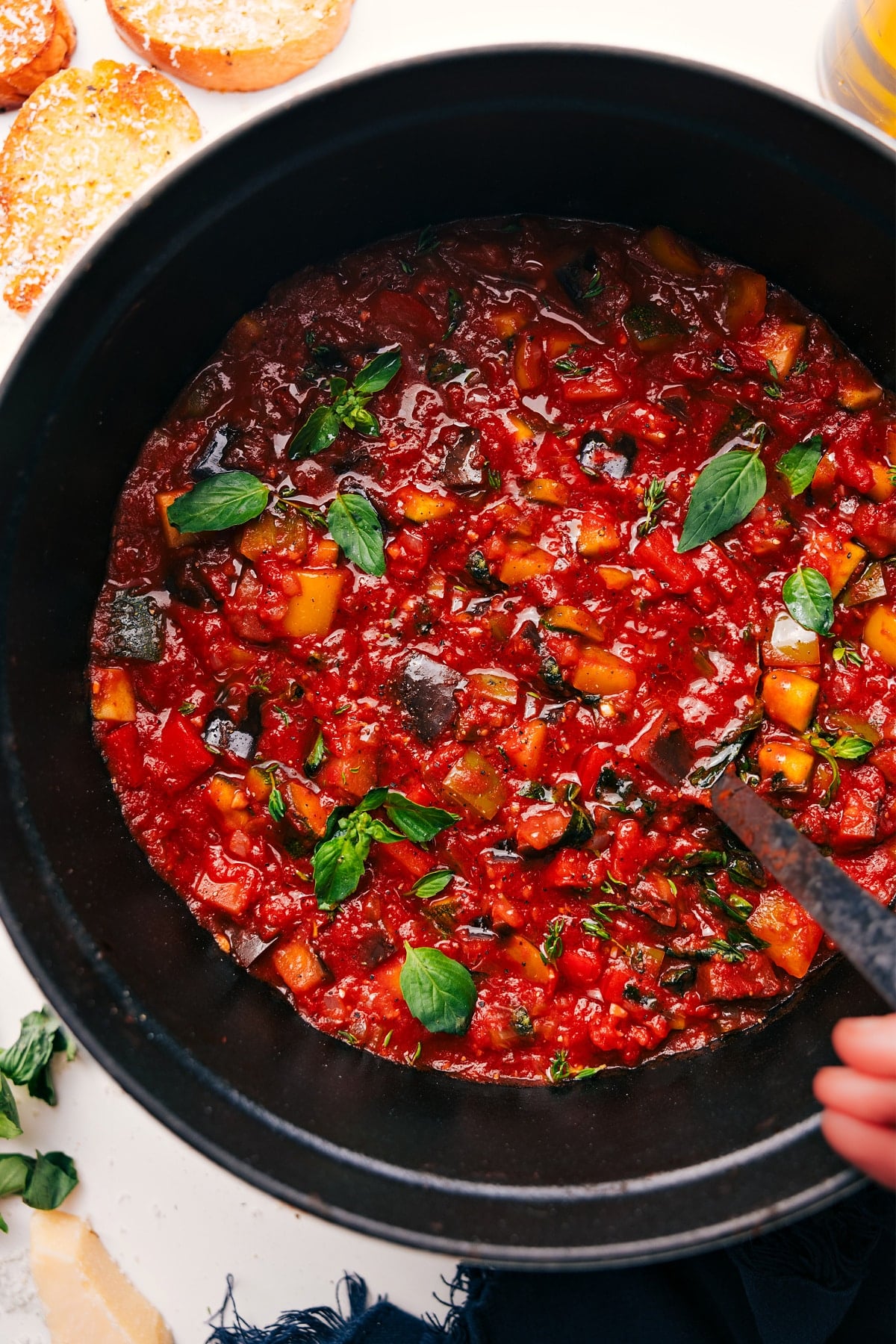
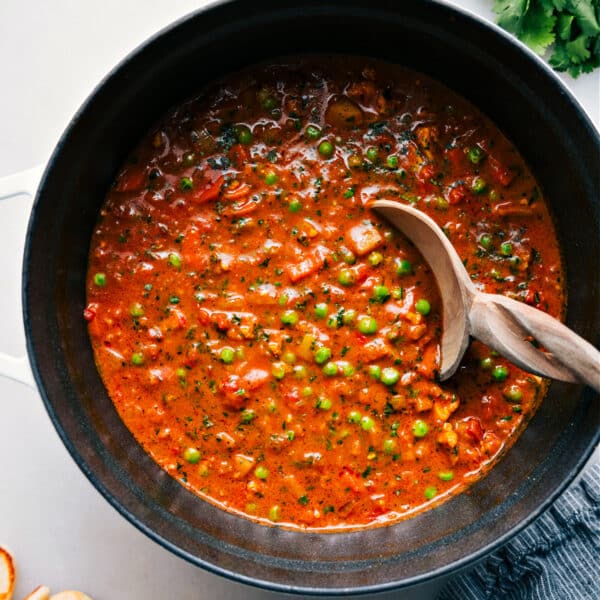
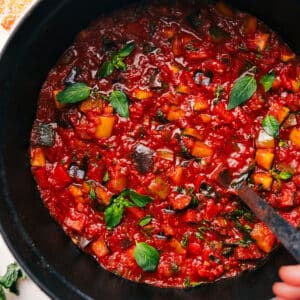
Ratatouille Soup is a favorite from culinary school! It’s pure feel-good comfort food, packed with veggies, rich olive oil, & plenty of crusty bread for dipping.

Author’s Notes
Straight From Culinary School to My Kitchen
Well, I’m back from London with a certificate in hand. I graduated from culinary school! Le Cordon Bleu was truly the experience of a lifetime, and I don’t know if I’ve ever been more excited about cooking and sharing new recipes.
One of the questions I got most often was, “What’s the first thing you’re going to make when you get home?” Well, here it is: ratatouille soup. I can’t think of anything more quintessentially French, and honestly, this was one of the highlight recipes from culinary school.
I’ve tweaked it just a touch from how we made it in class. At Le Cordon Bleu, we served our ratatouille underneath rosemary-marinated grilled lamb chops, so the vegetables were cut into a much smaller dice. Here, I’ve turned it into more of a soup, although it’s really closer to a thick, hearty stew. It should cook down enough that you could even serve it on a plate!
To me, few things beat a bowl of this with really good crusty bread, toasted with butter or drizzled with olive oil. Garlic bread is even better if you have an extra minute. And I love a little Parmesan on top too, even if it isn’t exactly traditional!

Ratatouille Soup Ingredients
| Ingredient | Let’s Chat About It |
|---|---|
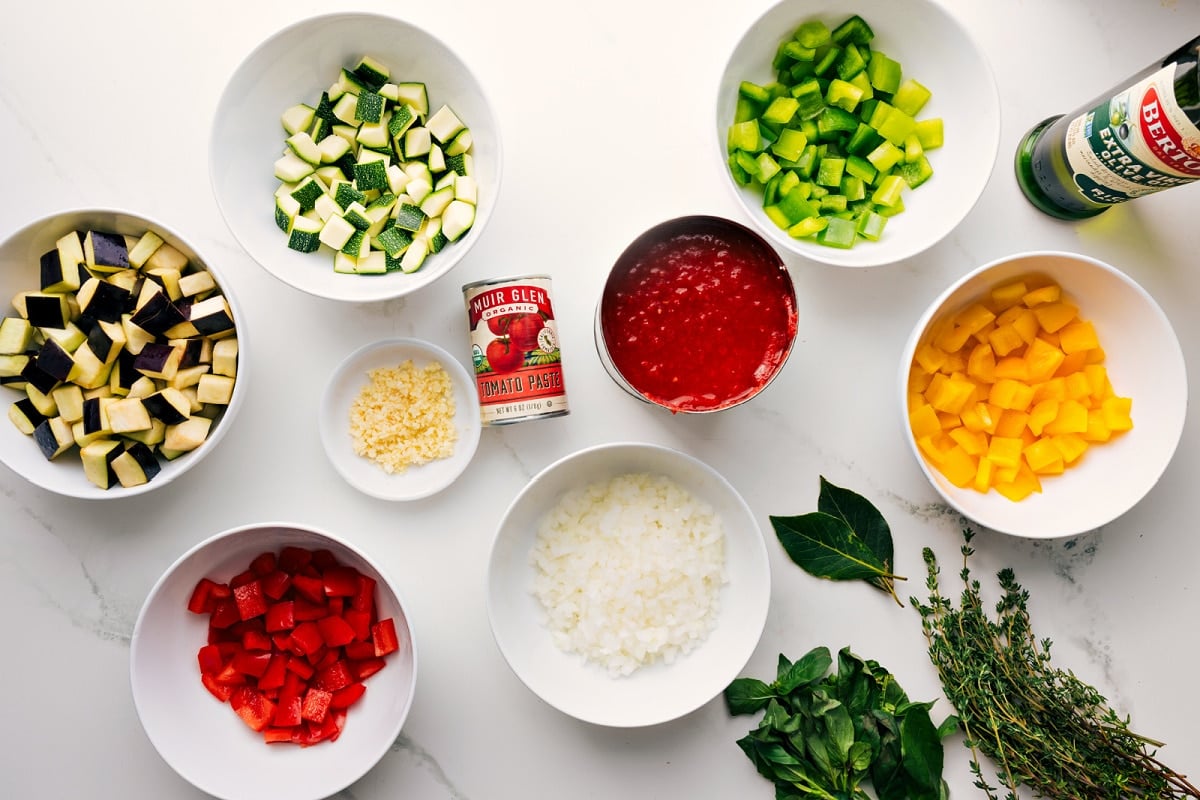
| Onion & Garlic | Dice the onion very finely and mince the garlic well so they meld into the tomato base really nice. |
| Bell Peppers | Use a mix of colors for the best flavor. Cut all the veggies as evenly as possible so they cook at the same rate. |
| Zucchini & Eggplant | Remove the soft, seedy centers before dicing. Salting the eggplant briefly helps draw out excess moisture. |
| Tomato Paste & Crushed Tomatoes | Use the best-quality tomatoes you can since they make up the rich base of this ratatouille soup. Cheaper tomatoes can sometimes have a more acidic/sour flavor. |
| Fresh Thyme, Bay Leaves & Basil | Simmer thyme and bay leaves with the vegetables, then stir in fresh basil and thyme right before serving for the freshest flavor. |
Quick Tip
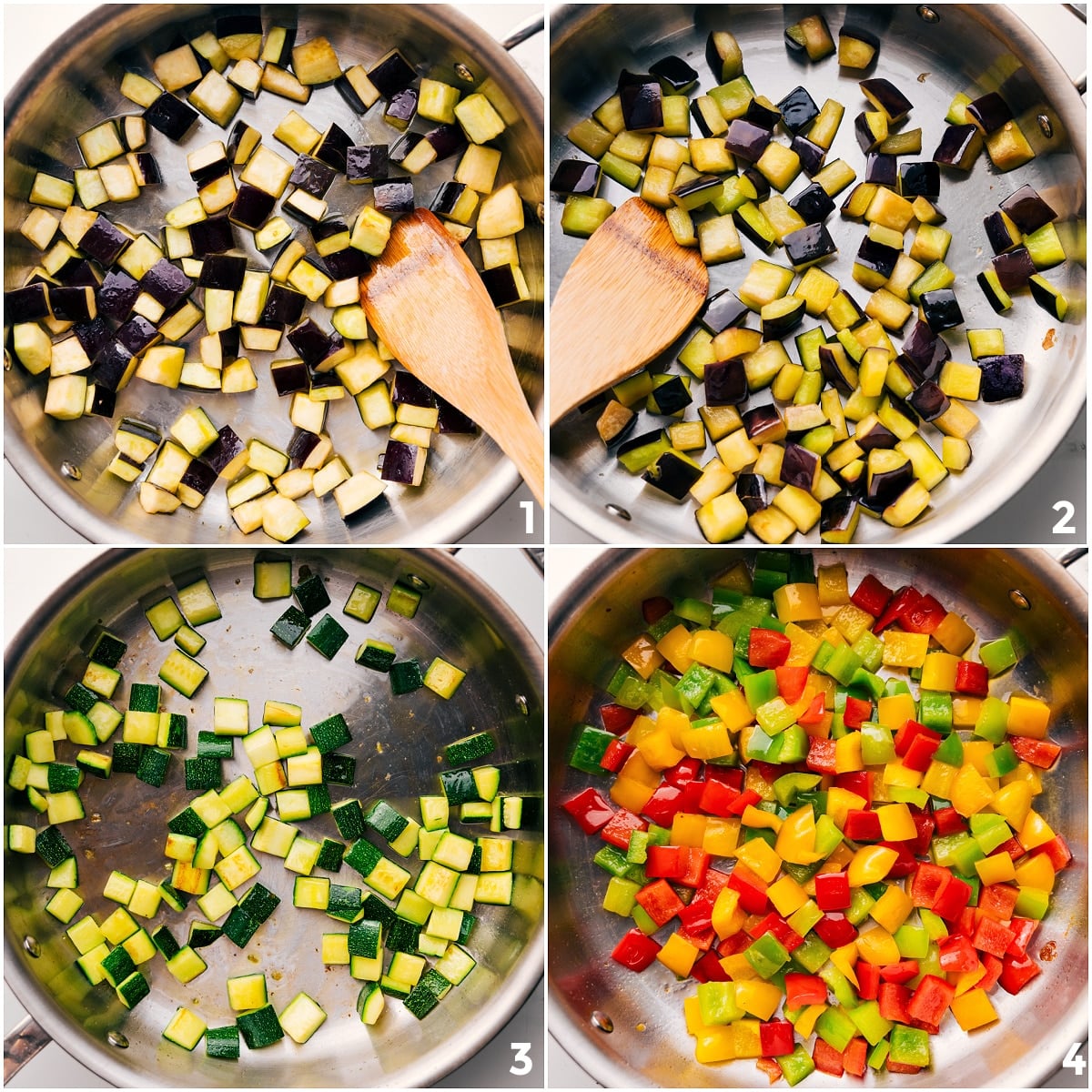
While it might seem annoying to sauté the veggies separately, it’s worth it. Each one cooks at a different rate, and cooking them in batches helps them brown instead of steam, prevents excess water, and keeps everything tender without turning mushy.
Chelsea’s Notes
Culinary School Tips
Here are a few things we went over in class while making Ratatouille Soup:
- Don’t crowd the pan: Give the veggies room to brown instead of steam.
- Cook in batches: This builds better flavor and keeps the vegetables from getting mushy.
- Season as you go: Add a little salt with each batch of veggies.
- Don’t overcook: The veggies should be tender but still hold their shape.
- Use good olive oil: With such simple ingredients, the olive oil adds a lot of the richness and flavor, so use one you really like.
What To Serve With Ratatouille Soup
Okay, honestly, this is my favorite way to eat it! Grab a fresh baguette or loaf of French bread and cut it into thick slices. Brush both sides generously with olive oil, then sprinkle lightly with garlic powder and Italian seasoning. Broil until nicely toasted, watching closely, then flip and repeat.
Right out of the oven, I love adding a little finely grated Parmesan. I basically use the bread as a spoon, dunking it straight into the Ratatouille Soup. SO good!
Quick Tip
Other ideas: Crusty bread, garlic, or cheesy bread is my top pick, but a simple garden salad, grilled chicken or lamb chops, creamy polenta, white beans, or a little burrata or goat cheese would all be delicious alongside it.
Storage
Store cooled ratatouille soup in an airtight container in the fridge for up to 4 days. Reheat gently on the stovetop or in the microwave. It often tastes even better the next day as the flavors meld.
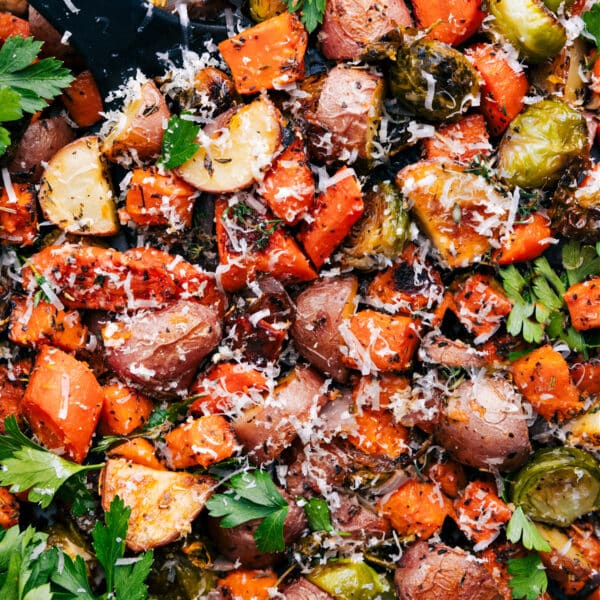
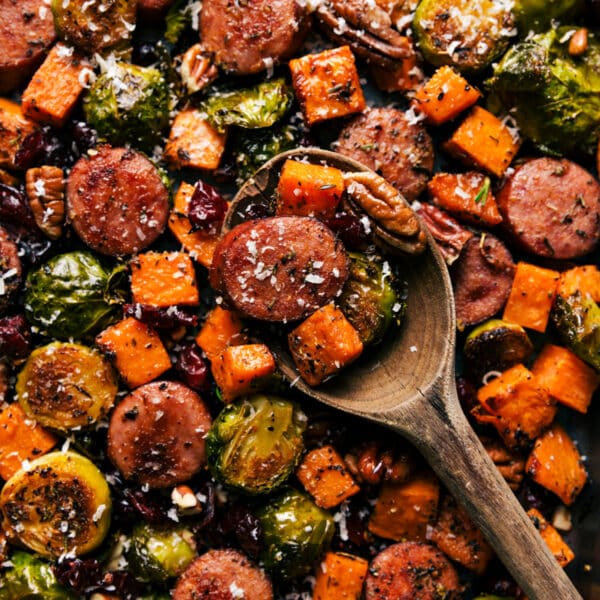
More Veggie-Packed Favorites

Ratatouille Soup
Video
Equipment
Ingredients
- 7 tablespoons extra virgin olive oil best quality, divided
- 1-1/4 cups finely diced yellow onion 1 large onion
- 1-1/2 tablespoons finely minced garlic 4 cloves
- 5 tablespoons tomato paste best quality
- 3 bell peppers cut to 1/2-inch cubes (I use 1 red, 1 yellow, 1 green)
- 1-1/2 cups diced zucchini deseeded & cut to 1/2-inch cubes, 2 small zucchini
- 1 medium eggplant deseeded & cut to 1/2-inch cubes, ~4 cups
- 1 can (28-ounces) crushed tomatoes best quality, see note 1
- 1/2 cup water
- 2 sprigs fresh thyme plus more for topping
- 2 fresh bay leaves
- 3/4 cup fresh basil leaves loosely packed, thinly sliced
- Salt and pepper to taste, see note 2
- 1 batch garlic bread see note 3
Instructions
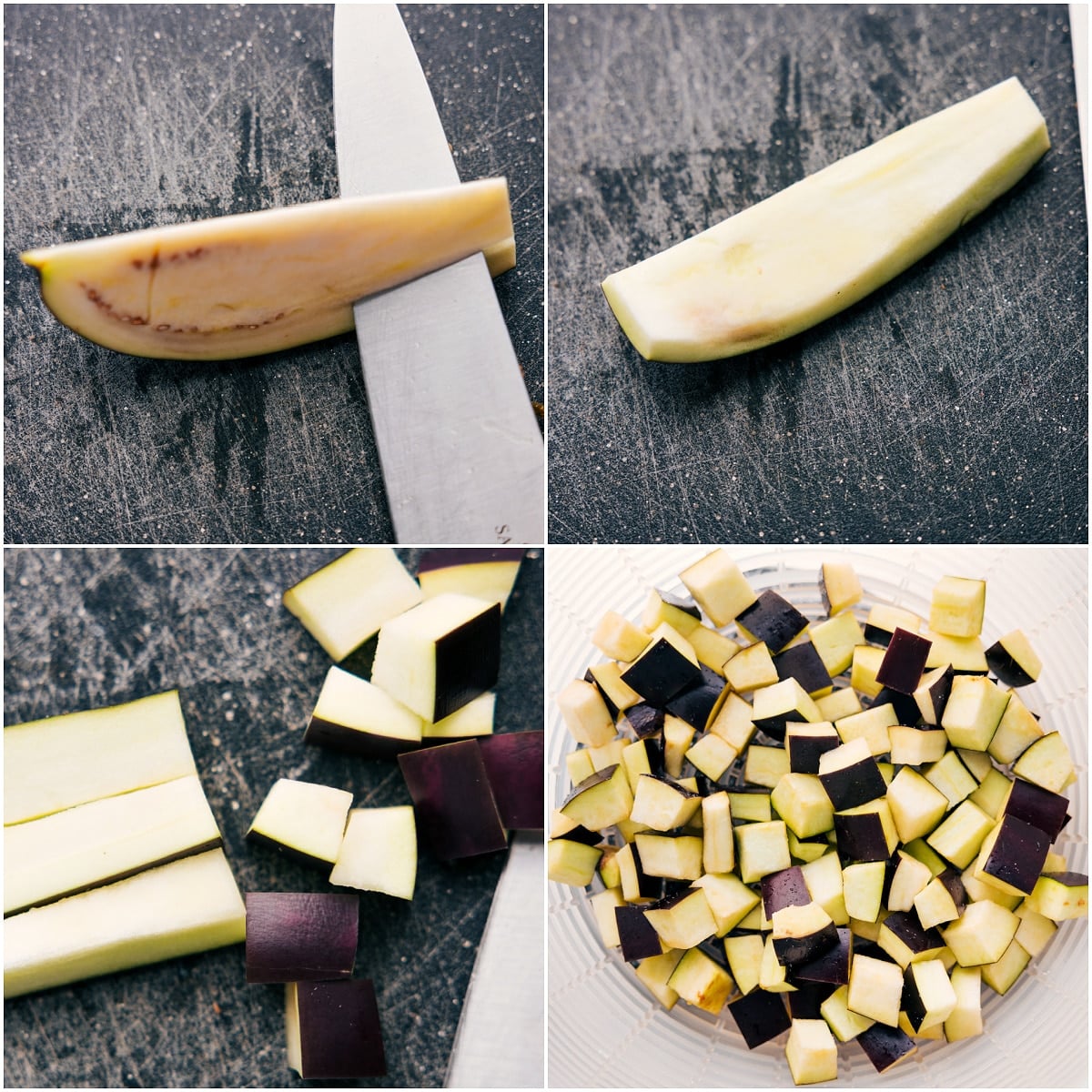
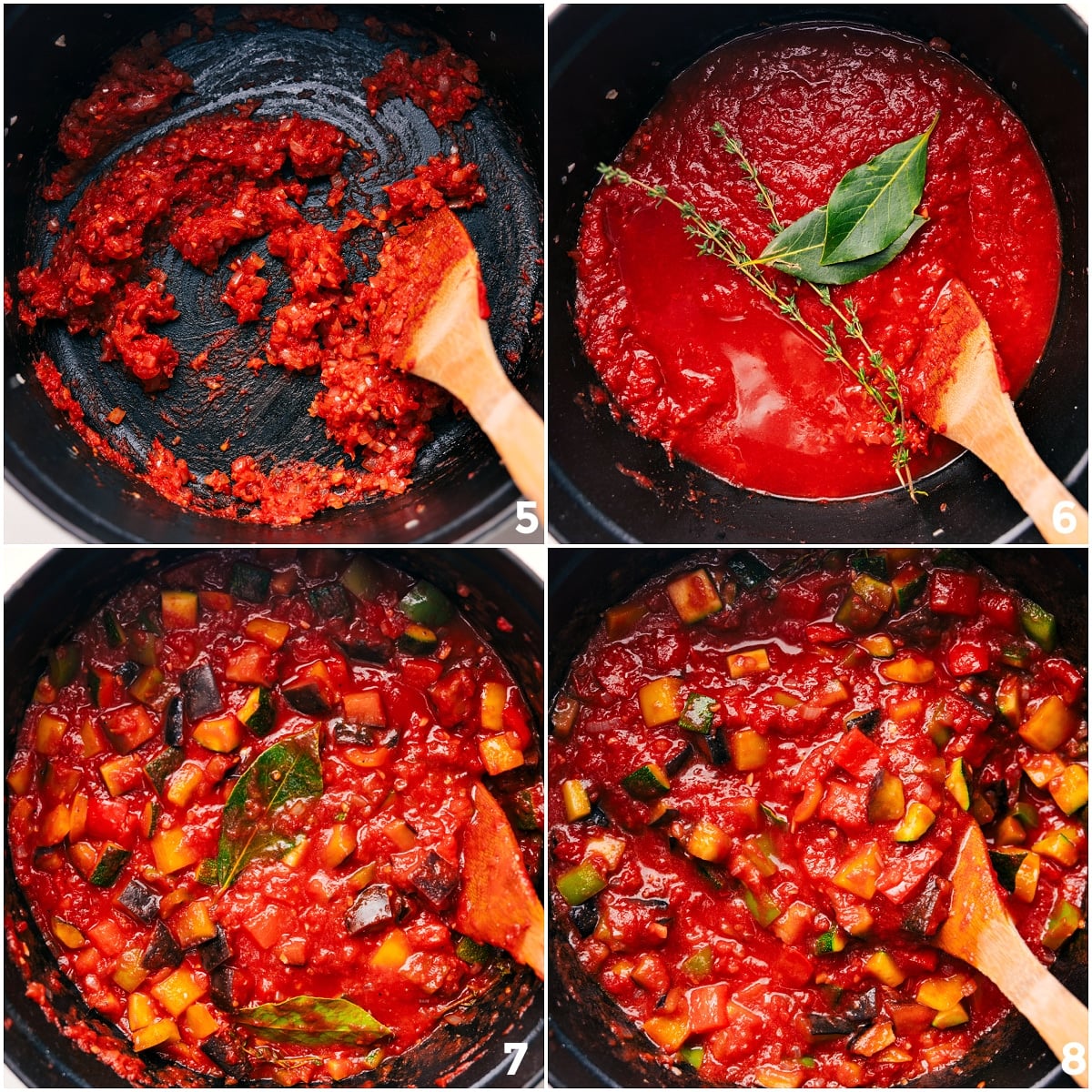
- Prep the vegetables: Keep the vegetables as evenly sized as possible so they cook at the same rate. Very finely dice the onion and finely mince the garlic. Remove the stems and seeds from the bell peppers, then cut into 1/2-inch cubes. Quarter the zucchini lengthwise. Use a paring knife to remove the soft centers, then cut into 1/2-inch cubes.Cut the eggplant lengthwise into 8 wedges. Use a paring knife to remove the soft, seedy centers, then cut the remaining eggplant into 1/2-inch pieces. Place diced eggplant in a colander set over a bowl. Sprinkle with 1/2 teaspoon salt and toss well. Spread into an even layer and let stand for 10–15 minutes. Pat dry with paper towel.
- Heat 1 tbsp oil in a large pot over medium heat. Add onion and a pinch of salt. Cook for about 5 minutes, stirring occasionally, until softened with lightly golden edges. Reduce heat to low and add garlic. Cook, stirring constantly, for 1 minute. Add tomato paste and cook, stirring constantly, for another minute.
- Pour in crushed tomatoes. Add 1/2 cup water to the empty tomato can, swirl to loosen any remaining tomato, then pour it into the pot. Reduce heat to the lowest setting and let gently simmer while cooking the vegetables.
- In a separate large skillet, heat 2 tablespoons olive oil over medium-high heat. Add eggplant and cook for 4–5 minutes, stirring regularly, until golden on the outside but still slightly firm in the center. Transfer to the tomato mixture. Don’t stir it in, just add it right on top!
- Back to the skillet, add 1 tbsp oil. Add zucchini and a pinch of salt. Sauté for about 3 minutes, stirring only occasionally. The zucchini should still be firm in the center. Transfer to the pot.
- Back to the skillet, add 2 tbsp oil. Add bell peppers and another generous pinch of salt. Cook for 3–4 minutes, stirring occasionally, until lightly softened but still firm. Transfer to the pot.
- Stir in thyme sprigs, bay leaves, and another pinch of salt and pepper. Simmer uncovered over low heat for 20–30 minutes, stirring occasionally, until the vegetables are tender and the liquid has reduced. You’re looking for a very thick, hearty, stew-like consistency that’s moist and juicy, but not watery.
- Remove thyme sprigs and bay leaves. Taste and add more salt and pepper as needed. Veggies need a generous amount, so keep seasoning until the flavors really sing! Stir in basil and additional fresh thyme leaves, if desired.
- Serve immediately, divided among bowls. Finish each bowl with a generous drizzle of olive oil, additional basil, and fresh thyme leaves, if desired. Serve with garlic bread or warm toasted bread (see Note 1).
Recipe Notes
Nutrition
Nutrition information is automatically calculated, so should only be used as an approximation.












Is this yummy recipe gluten free?
Yes it is!
I LOVED it!!
Yay! Thanks Vicky!