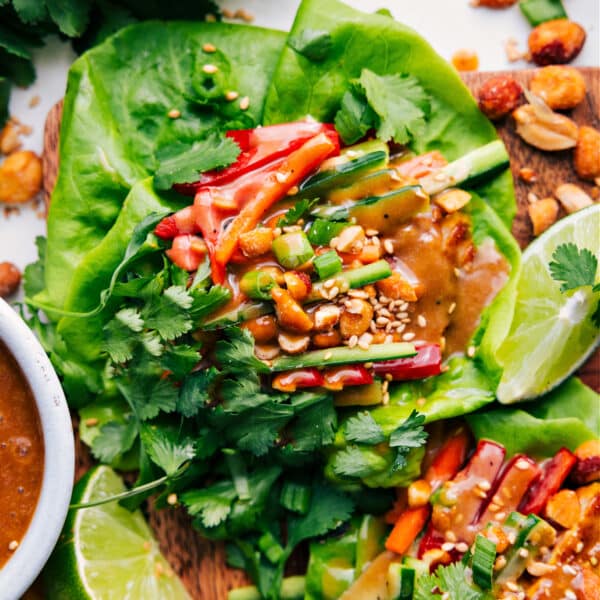
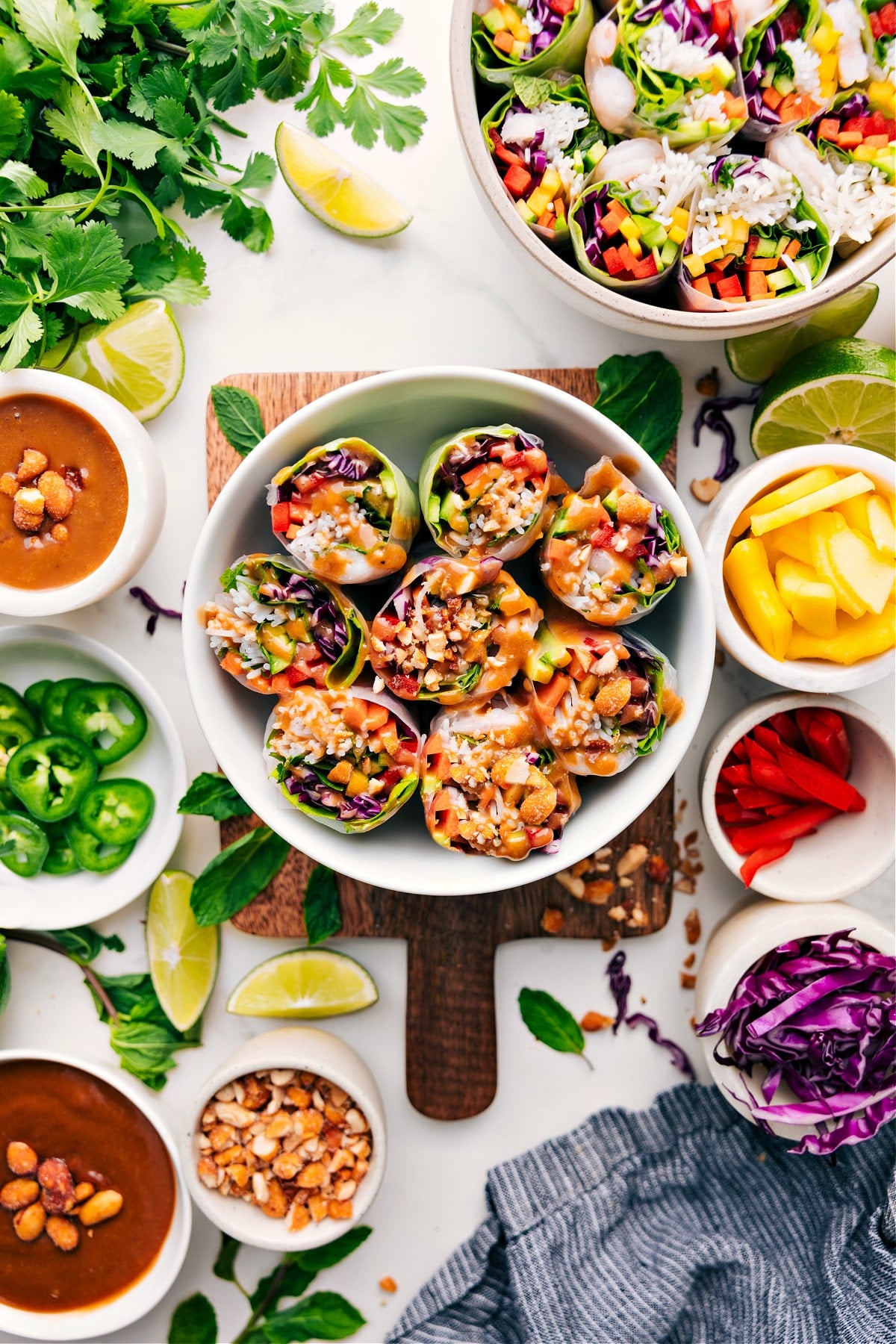
How To Make Spring Rolls! It’s easier than you think: fill soft rice paper with crisp veggies, tender noodles, fresh herbs, and juicy shrimp, then roll and dip in the best peanut sauce.

author’s notes
Where My Spring Roll Obsession Began
Years ago, I went to an activity at my church where a woman who had served an 18-month mission in Vietnam was teaching us about her favorite food there: fresh spring rolls.
She had the most incredible setup with tables full of fillings, everything from bean sprouts and herbs to fruits and crisp veggies. She shared stories from her time in Vietnam, showed us how to make spring rolls, and then let us loose to build our own exactly how we liked them.
I’ve loved spring rolls ever since, and I’m not sure why it’s taken me so long to share them here!
The best part about spring rolls is making them your own. Add what you love and skip what you don’t. And the peanut sauce? It’s my absolute favorite. It’s sweet, a little indulgent, and the perfect match for the fresh, crisp rolls.

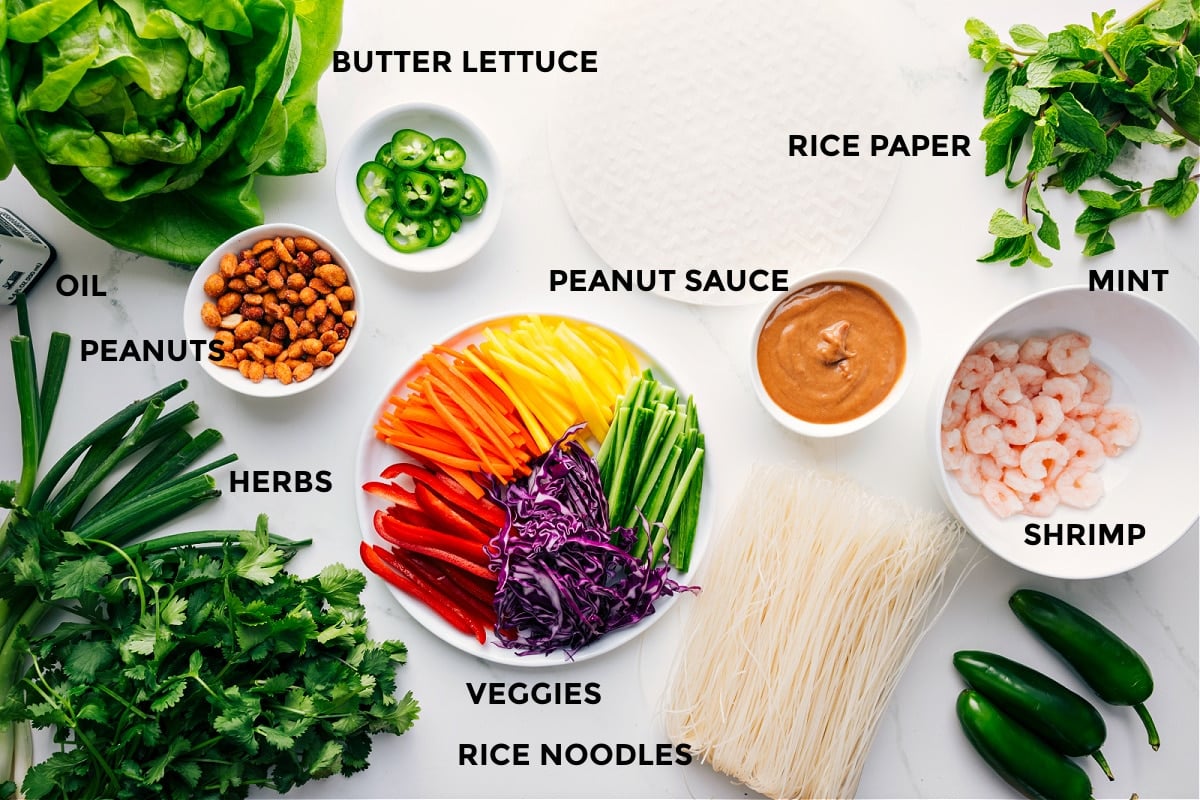
How To Make Spring Rolls: Ingredients
| Ingredients | Tips |
|---|---|
| Rice vermicelli noodles & sesame oil | Cook just until tender, rinse in cool water, then toss with sesame oil so the noodles don’t all stick together. |
| Rice paper wrappers | Soak just until pliable. If they get too soft in the water, they’ll tear easily when rolling. |
| Lettuce, cabbage, carrots & cucumber | Slice everything very thin so the rolls are easy to wrap and have a nice, crisp bite. |
| Shrimp or chicken | Use fully cooked, well-drained protein. I love shrimp or chicken best in these! |
| Cilantro, mint, basil & peanut sauce | Fresh herbs add so much flavor. Don’t skip the sauce, it’s the best part! 🙂 |
Quick Tip
For a fun, interactive meal, set all the fillings out on the table with a bowl of water and teach everyone how to make their own spring rolls. It’s always a hit and turns dinner into something a little more fun!
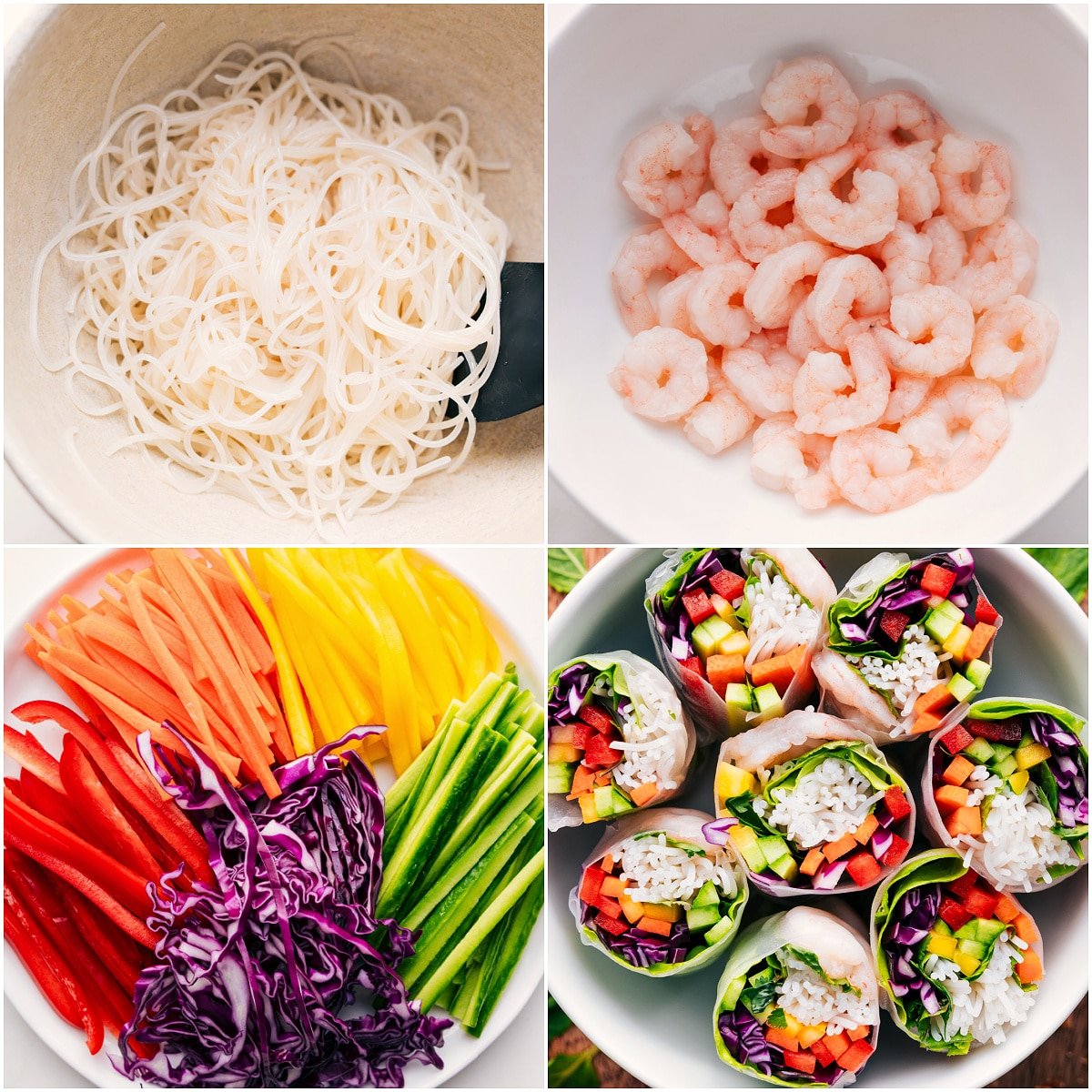
How To Make Spring Rolls
- Cook noodles: Boil until tender, drain, rinse, and toss with sesame oil and salt.
- Prep station: Fill a shallow dish with water and arrange all fillings nearby.
- Soften wrapper: Dip one rice paper for 10–15 seconds, then place on a towel.
- Add fillings: Layer lettuce, noodles, veggies, herbs, and shrimp on the lower third.
- Roll: Fold in sides, then roll up tightly like a burrito.
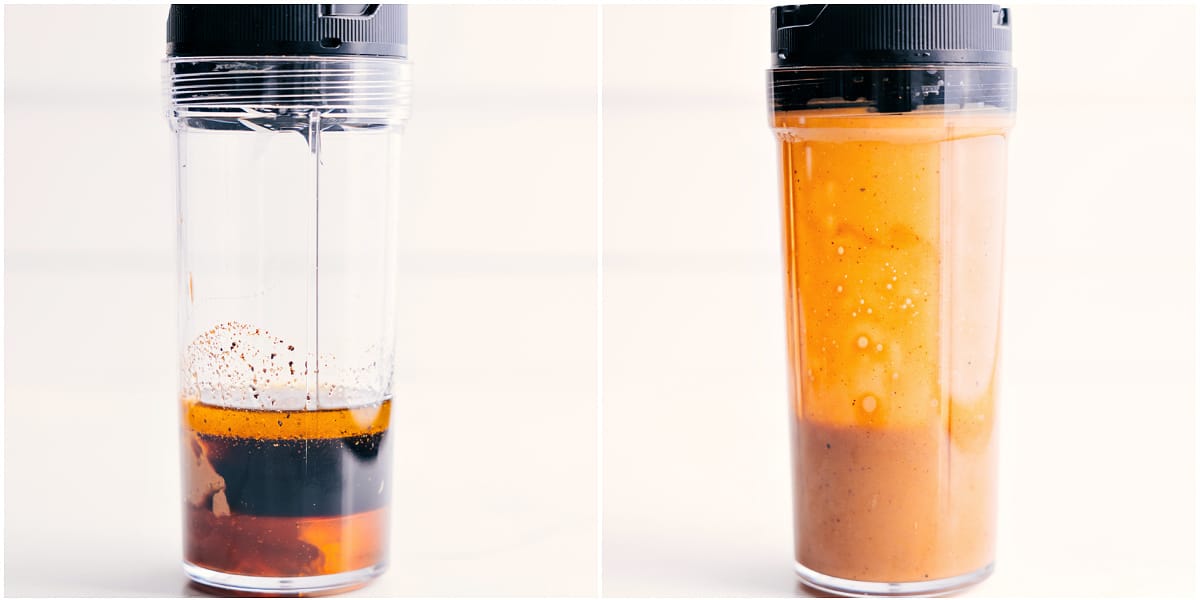
- Blend sauce: Process all sauce ingredients until smooth.
Chelsea’s Tips
Top Tips for Perfect Spring Rolls
Don’t over-soak the wrappers: Dip each rice paper just until pliable.
Prep everything first: Have all fillings washed, sliced, and within reach before you start. Spring rolls come together quickly once the wrappers are wet.
Use a light hand with fillings: Overfilling makes rolling difficult and can cause the wrapper to split. A small amount of each ingredient works best.
Roll tightly like a burrito: Fold in the sides first, then roll from the bottom up, keeping gentle tension so the roll holds together.
Keep finished rolls covered: Place rolled spring rolls under a lightly damp, lint-free towel so the wrappers stay soft and don’t dry out.
Variations
Other great add-ins include thinly sliced avocado, bean sprouts, shredded green cabbage, snap peas, or thin strips of tofu. You can also swap in rotisserie chicken or cooked salmon for the shrimp.
Storage
I find these are best fresh and don’t love making them ahead of time. If needed, store for max of 6 hours. Wrap each roll tightly in plastic wrap as soon as it’s made, then refrigerate. (Don’t just cover the plate; wrap each roll individually or they’ll stick together.)
More Fresh, Flavor-Forward Dishes:
Dinner
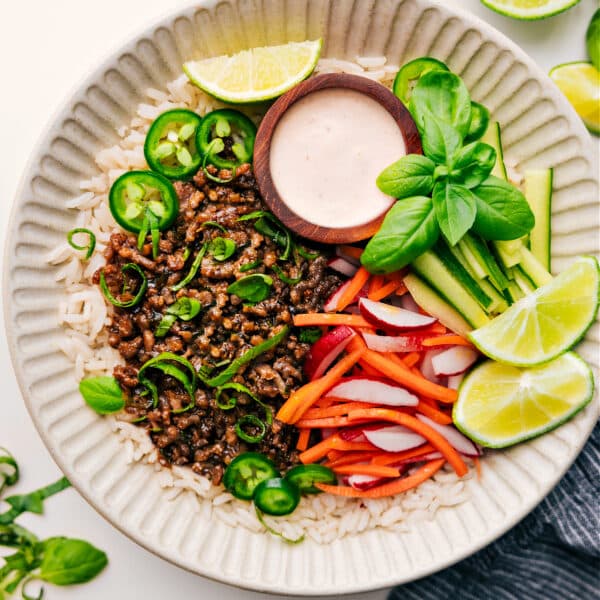
Banh Mi Bowl
Salads
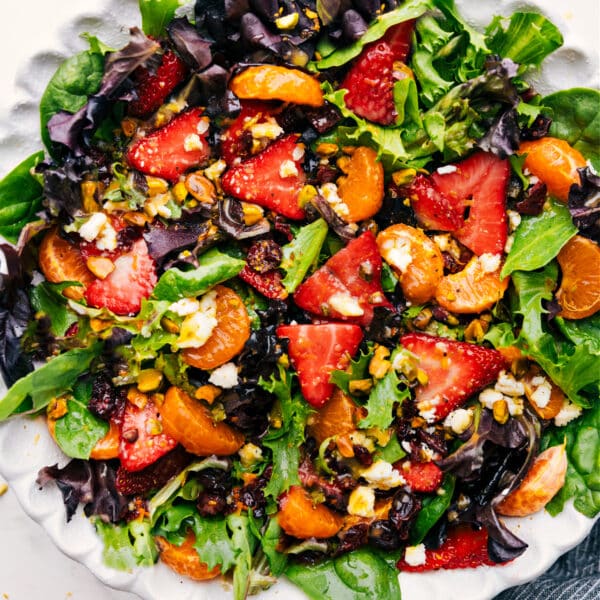
Strawberry Salad
Dinner
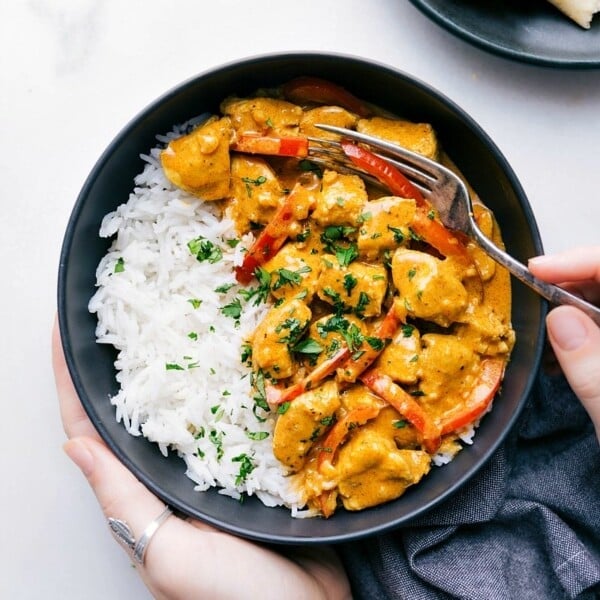
Coconut Curry Chicken
Salads With Meat
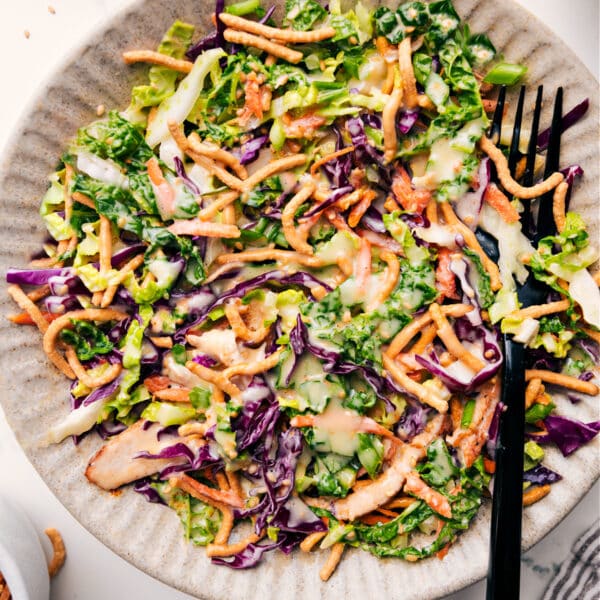
Asian Chicken Salad Recipe
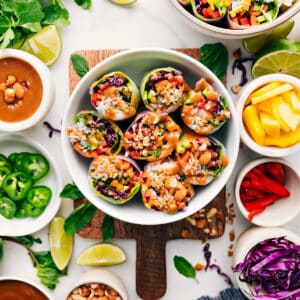
How To Make Spring Rolls
Video
Equipment
Ingredients
- 2 ounces rice vermicelli noodles
- 1 teaspoon toasted sesame oil
- 1/4 teaspoon salt
- 8 spring roll wrappers
- 1 cup butter lettuce ribs removed, leaves torn or cut
- 1 cup thinly sliced red cabbage
- 1 cup thinly sliced carrots peeled & cut to matchsticks
- 1 cup thinly sliced mango
- 1 cup thinly sliced cucumber Persian/English cucumbers
- 1/2 cup fresh cilantro
- 1/4 cup fresh mint
- 1/4 cup fresh basil or thinly sliced green onions
- 1/2 pound extra-small cooked shrimp deviened & tails reoved, or use shredded chicken or leave out for vegetarian
- 1/4 cup creamy peanut butter
- 3 tablespoons honey
- 2 tablespoons olive oil
- 2 tablespoons water
- 1-1/2 tablespoons rice vinegar
- 1-1/2 tablespoons reduced-sodium soy sauce
- 1/8 teaspoon pepper
- 1/8 teaspoon cayenne pepper optional, and to preference
- honey-roasted peanuts coarsely chopped, optional, for topping
Instructions
- Add peanut butter, honey, olive oil, water, rice vinegar, soy sauce, pepper, and cayenne (if using) to a small blender. Blend until smooth. Refrigerate until ready to serve.
- Bring a pot of unsalted water to a boil. Cook the rice vermicelli according to package directions. Drain, rinse under cool water for 30 seconds, shake off excess water, and return to the pot. Toss with sesame oil and salt, then set aside.
- Fill a shallow dish or pie pan with about 1 inch of warm water. Place a clean, lint-free tea towel next to it. Arrange prepared (cut) lettuce, cabbage, carrots, mango, cucumber, herbs, noodles, and shrimp within easy reach.
- Place one rice paper wrapper in the water for 10–15 seconds, just until pliable but still slightly firm. It will continue softening as it sits. Carefully transfer it to the towel or a clean work surface.
- On the left third of the wrapper, layer a piece of lettuce, a small handful of noodles, a few slices of each veggie, 3-4 shrimp, and some herbs. Leave about 1 inch of space around the edges.
- Fold the left and right edges of the rice paper over the filling. Starting from the bottom, roll up to cover the filling, then keep rolling firmly until sealed. The rice paper is sticky and will seal itself. Repeat with remaining ingredients.
- Serve spring rolls whole or sliced in half on the diagonal with peanut sauce on the side. Sprinkle with chopped peanuts if desired.
Recipe Notes
Nutrition
Nutrition information is automatically calculated, so should only be used as an approximation.